


AHA ACLS
3.439.00 Reviews
App Specs
- Version
- 3.2.0
- Updated On
- License
- Free
- Downloads
- 50,000+
- Developer
- Massachusetts General Hospital IS
- Categories
- Medical
- Platform
- Android
Screenshots


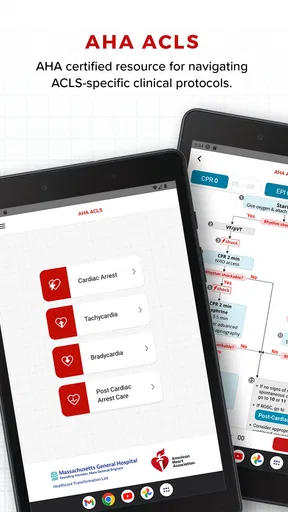
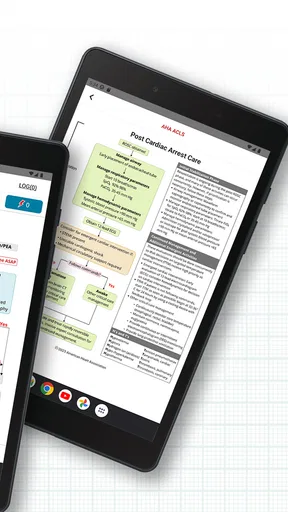
 Analysis by AppCompare
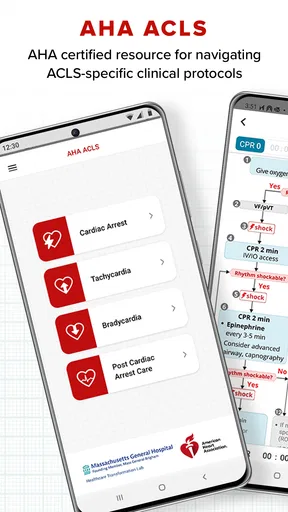
I approach AHA ACLS as a reference and practice aid for people who already have a reason to learn advanced cardiac life support, not as a substitute for training or clinical judgment. Its focus is specific: ACLS algorithms, protocols, and practice. That makes it more useful to a clinician or learner who wants to revisit a sequence than to someone looking for general health advice.
Getting Started with the App
The first thing you'll notice when you download the AHA ACLS app is how streamlined the interface is. I mean, it’s like they knew you’d be juggling a million things at once. You open it up, and bam, everything you need is right there in front of you. The layout is clean, intuitive, and definitely user-friendly, even if tech isn't exactly your best friend.
Setting it up is a breeze. Once you log in, you’ve got access to a treasure trove of resources. The app primarily serves as an educational tool, but it’s got some neat features that’ll make you feel like a pro in no time.
A practical baseline workflow
I would begin by treating the app as a study companion rather than opening it for the first time during a stressful event. Pick a topic you have recently covered in class, read the associated protocol, then use a scenario or quiz to check whether you can apply the sequence without relying on recognition alone. That simple loop—review, retrieve, then check—makes the material more actionable than scrolling through a reference library without a goal.
A realistic use is a short review before a shift or study session. I might choose one algorithm, read it carefully, and then close the reference while trying to recall the next decision point. If I hesitate, I reopen the relevant material and identify exactly where my mental sequence broke down. This is a more useful habit than repeatedly rereading a whole topic, because it shows what I can actually retrieve under pressure.
The app is free to download, and it is published by Massachusetts General Hospital IS. It sits in the medical category, has an Everyone age rating, and has reached over ten thousand installs. Its average rating is three out of five from around 120 ratings, so I would not take the favorable parts of my experience as proof that every user will find it equally smooth.
Features That Stand Out
One of the coolest things is the interactive scenarios. Imagine you’re in the middle of a real-life situation, and you’re prompted with different choices to make. It’s like a choose-your-own-adventure book, but with way higher stakes.
Worth Reading Before You Choose

EA SPORTS FC Mobile 26 Is a Bigger Football Game, but It Takes Time

Flipboard Shows What News Apps Must Do Beyond the Feed

Switching to Android Auto Means Rethinking Your Driving Routine

Google Calendar Makes a Crowded Week Easier to Manage

Ludo King Makes the Most of the Minutes Between Plans

Baby Panda World Brings Quick Play to Modern Phones, but Its Game Library Feels Busy
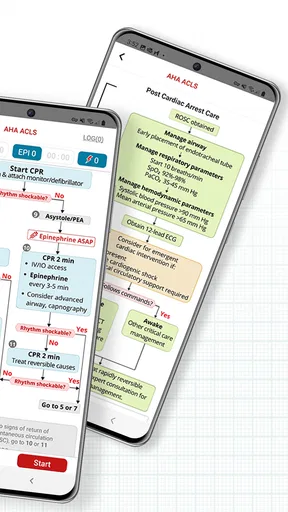
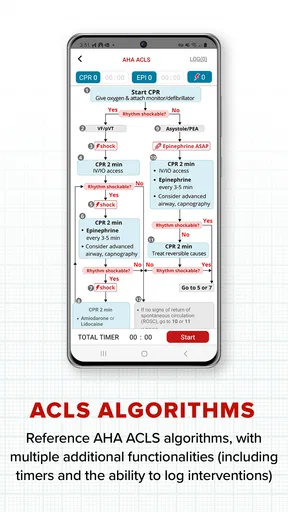
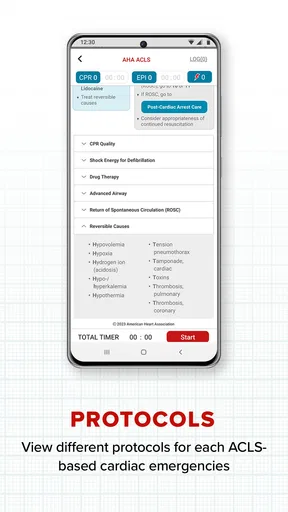
The app also includes a comprehensive library of algorithms and guidelines. You can literally carry around the latest AHA guidelines in your pocket. It's like having a mini library that’s both portable and super convenient. No more flipping through pages of a bulky textbook!
Another thing I loved is the quizzes. They’re not just your typical boring multiple-choice questions. These quizzes make you think and really test your knowledge. And let's be honest, who doesn’t love a good quiz to pass the time?
Settings, access, and sensible checks
Before making this a regular study tool, I would check the app’s current version and make sure it runs on the device I plan to use. Version 2.0.0 is the current release, and the stated minimum operating-system requirement is 7.0. That matters if you are keeping an older phone as a backup: install and open the app ahead of time instead of discovering a compatibility problem when you need to review something.
I would also look at any in-app purchase prompts before assuming every piece of content is included at no cost. The app is free, but in-app purchases are listed at $3.99 per item. For a learner on a budget, the practical move is to inspect what is available in the free experience first, then decide whether a specific paid item fills a real learning need rather than buying out of habit.
There is another useful check that is easy to overlook: establish whether the content you are reviewing matches the materials and procedures used in your course or workplace. A pocket reference can help you study, but it should not become a reason to ignore local training, equipment, or team protocols. In a clinical setting, I would use it to reinforce what I have been taught, not to settle a disagreement or replace the direction of the responsible clinician.
Real-Life Applications
What really sets this app apart is how it prepares you for real-world applications. I tried a few of the scenarios in the app during my shift, and I could actually feel my confidence levels soaring. The practice scenarios are so realistic that when you actually face a similar situation, you’re more prepared than ever.
The app makes it easy to keep updated with any changes in guidelines. It’s like having a direct line to the latest updates, which is crucial when you’re dealing with life-saving protocols. Staying updated has never been easier.
Faster patterns for repeat practice
Once I know where the relevant material is, I would avoid turning every study session into a broad tour of the app. A more efficient pattern is to select one topic, work through its scenario, and use a quiz to expose a weak point. Then I can revisit only that part of the reference. This keeps practice focused and makes a limited break more productive than browsing without a question in mind.
For a group review, one person can read a scenario while another explains the reasoning behind each choice, then swap roles. That turns the app into a prompt for discussion rather than a screen everyone silently studies. It is especially useful for noticing whether a learner understands why a step follows another, instead of simply recognizing familiar wording. I would keep the discussion tied to formal course materials and instructor guidance.
A further trade-off is how to use the quizzes. Repeating questions until the answers feel familiar can create a false sense of mastery. I get more value by pausing before each answer and explaining my reasoning aloud, then checking the feedback or reference. If I remember the answer but cannot explain the decision, I treat that as a topic to review, not a successful result.
Usability and Design
As for the design, it’s pretty sleek. No unnecessary frills or distractions, just a straightforward interface that gets you where you need to be. The color scheme is easy on the eyes, which is something I really appreciate, especially after a long day.
Navigation is a breeze. Whether you’re looking for specific guidelines or just want to browse through the scenarios, finding your way around is super intuitive. Plus, it’s compatible with both Android and iOS, so no one's left out of the loop.
Where it fits among ACLS learning tools
Compared with a printed manual, a phone-based reference is easier to carry and can make it quicker to move between an algorithm, a scenario, and a knowledge check. A manual may still be better for uninterrupted reading, annotation, or a course where the instructor expects everyone to follow the same physical material. I would not treat convenience as a reason to abandon a book or official course resources that are central to a class.
Compared with a general medical reference app, this one has a narrower purpose: ACLS learning and protocol review. That focus is helpful if you want to work on these specific topics, but it is not the right choice for broad clinical questions, diagnosis, or a general reference across specialties. And compared with hands-on instruction or a live simulation, an app cannot reproduce team communication, equipment handling, or the pressure of coordinating care. Its strongest role is preparation and reinforcement between those experiences.
I would recommend it most to students studying ACLS, clinicians who want a convenient refresher, and people who learn well by alternating between reading and practice questions. It is less suitable for someone without relevant training who expects the app to teach them to manage a real emergency independently. If your immediate need is emergency help, contact emergency services and follow the instructions of qualified responders; studying a protocol in an app is not a substitute for that.
Limits that matter in clinical use
The most important limitation is the gap between practice and performance. A scenario can help me think through a sequence, but it cannot tell me whether I can carry it out correctly with a team, equipment, interruptions, and a patient in front of me. I would pair app-based review with formal instruction and hands-on practice, and I would never use a quiz result as evidence that I am ready to take responsibility beyond my training.
I also would not assume that a phone reference is always the best tool in the moment. During an active emergency, searching a screen can distract from team communication and established procedures. The app makes more sense for preparation, deliberate review, or a quick reference when that use is appropriate in the setting. For a time-critical decision, follow workplace protocols and the direction of qualified clinical staff.
The app’s rating is mixed, and that is a reason to try the experience yourself before building a study routine around it. The catalog includes thirty-five written reviews, while user ratings may reflect different devices, expectations, and study needs. If navigation or access feels awkward on your phone, a course manual or another approved reference may be a better fit. I would prioritize a resource I can use reliably over one that looks convenient in theory.
Wrapping It Up
In a nutshell, the AHA ACLS app is a game-changer. Whether you’re a seasoned pro or a newbie in the medical field, there’s something in it for everyone. It’s practical, educational, and incredibly user-friendly.
I’d say give it a try, especially if you’re looking to boost your skills or simply want a reliable resource at your fingertips. It’s like having a personal tutor that’s available 24/7. And who doesn’t want that?
My recommendation comes with a clear boundary: use it to study, rehearse decisions, and refresh material you already have a foundation in. Do not rely on it as your only preparation for ACLS or as an authority that overrides current training and workplace procedures. The app was released on March 17, 2021, and its current version is 2.0.0, so I would check that it still fits my device and learning routine before depending on it regularly.
Who should make room for it?
For an ACLS learner who wants compact practice between classes, this is an easy option to consider, particularly if scenarios and quizzes help keep study active. A working clinician may also appreciate having protocol material close at hand for planned review. I would be more cautious if I needed a comprehensive medical reference, a structured course with instructor feedback, or a simulation environment that tests teamwork and hands-on technique; those needs call for different tools.
Ultimately, I see the app as a focused companion, not a shortcut to competence. Use it with a repeatable routine, check paid content before expecting it to be included, and keep formal learning at the center. If that is the role you want from an ACLS app, it is worth trying; if you need a replacement for training or real-time clinical direction, it is not the right choice.
Pros
- Comprehensive training modules.
- User-friendly interface design.
- Supports offline access.
- Regularly updated content.
- Includes interactive scenarios.
Cons
- Limited free content available.
- Requires stable internet for updates.
- Some modules are lengthy.
- Navigation can be confusing at times.
- No option for dark mode.
FAQs for AHA ACLS
What is AHA ACLS and who is it for?
AHA ACLS (Advanced Cardiovascular Life Support) is a mobile application designed to provide healthcare professionals with essential training and guidelines for managing cardiovascular emergencies. It's particularly useful for doctors, nurses, and paramedics who need to stay updated on life-saving procedures and protocols. The app offers interactive learning modules, videos, and quizzes to ensure comprehensive understanding.
Is the AHA ACLS app available on both Android and iOS?
Yes, the AHA ACLS app is available for download on both Android and iOS platforms. Users can easily find it on the Google Play Store for Android devices and the App Store for iOS devices. This accessibility ensures that healthcare professionals can access vital information on the go, regardless of their smartphone preference.
Does the AHA ACLS app require an internet connection to function?
The AHA ACLS app does not require a constant internet connection, which makes it convenient for use in various settings. While some features may need internet access, such as updates and certain interactive components, the core content and guidelines can be accessed offline. This is particularly beneficial in emergency situations where internet access may be limited.
Are there any costs associated with using the AHA ACLS app?
The AHA ACLS app may come with an initial purchase cost or require in-app purchases for accessing certain premium features. It's important for users to check the app's listing on the Google Play Store or App Store for the most accurate pricing information. Some institutions may also offer access codes or discounts for their staff.
How does the AHA ACLS app ensure the content is up-to-date?
The AHA ACLS app is regularly updated to align with the latest guidelines from the American Heart Association. The developers ensure that users receive notifications about updates, which can include new protocols, training modules, and procedural changes. This ensures that healthcare professionals are always equipped with the most current knowledge and practices.


